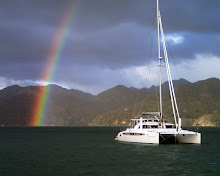
During our overnight sail from Niuatoputapu to Neiafu in the Vava’u Island
group of Tonga, we were challenged by winds with a significant, southerly
component forcing us to point “Blue Rodeo” as close to the wind as
possible. Throughout the first day, we did well and managed to gain a few
miles of progress east of our rhumb line in anticipation of an even more
southerly wind shift during the night. Our strategy worked well until a
west-setting current conspired against us forcing us to either tack back
and forth or motor sail to make our desired landfall. We opted for the
latter and used our trusty diesel engine for the last 2 ½ hours of the
passage. After following our electronic chart guidance and range markers
ashore, we entered the protected harbor at Neiafu and tied to a mooring
ball near the Aquarium restaurant, a popular cruiser hang-out.
Once we were moored and our engine shut down, Anne noted a strong, acrid
smell coming from our engine room. Mark’s initial inspection confirmed
the odor but revealed nothing amiss in terms of overheated equipment,
hoses or wiring. Later that day however, after opening the sealed box
containing our two engine starting batteries, he was horrified to find
that the main engine battery was extremely hot and had boiled out most of
its acid electrolyte. A long, messy cleanup ensued before the toxic
solution was thoroughly neutralized and the battery removed from the
system. Clearly the battery had been subject to a sever overcharge so,
over the next few days, Mark would spend hours attempting to determine the
cause. Fortunately, “Blue Rodeo’s” electrical system has adequate
redundancy so, despite ruining the main engine start battery, were could
interconnect portions of the system in order to be fully functional.
Needless to say, while we had several enjoyable days getting to known the
town of Neiafu, Mark’s brain would remain rather preoccupied with the
mental trouble-shooting and solution seeking for our problem. Once again,
cruising has defined itself as doing boat repairs and maintenance in
exotic parts of the world.
Neiafu, Vava’u is a quaint little place with an eclectic assortment of
shops, markets and restaurants that cater to international tourists, many
of whom have come for the opportunity to watch and swim with the Humpback
whales that come here each year to give birth and nurture their young
before heading to the colder waters of the Southern Ocean. We had, in
fact, already seen several whales frolicking in the waters around us.
While in Neiafu, we had a chance to do some re-provisioning and indulge
our cravings for cheeseburgers and fish ‘n chips. One evening, we joined
a dozen of our cruising friends for dinner ashore and watched, on
satellite TV, a football (rugby) game between Australia and New Zealand.
Since our group was composed of a nearly-equal mix of “Aussies” and
“Kiwis”, the evening proved to be great fun as everyone teased each other
over their nationalistic rivalries. For us, not knowing anything about
the sport of rugby, it was an education. We have to admit though that we
still don’t understand much of the game.
It soon became clear that Neiafu is one of those places that cruisers
refer to as a “vortex” that can suck sailors in due to the lively social
scene and comfortable amenities. Resisting the urge to hang out for a
longer period of time, we left the port in company with friends on the
yachts” Malarkey” and “Awaroa” and sailed to a beautiful bay called Port
Morelle where we would spend several days snorkeling , SCUBA diving and
exploring two sea caves that are a short distance away. One, Mariner’s
Cave, requires swimming about 30 feet, 10 feet below the surface to gain
entrance. Once inside the cave, visitors are treated to the amazing sight
of the water-sculpted cave walls and ceiling illuminated by light
reflected off the sea floor from the outside. With passing swells, air in
the cave is compressed causing a pressure change that is felt in the ears.
When the swells subside, the resultant pressure drop causes the cave’s
air, thick with moisture, to momentarily produce fog…quite an experience!
Another cave, about a mile away, can be entered by dinghy but features
even more dramatic lighting and is a hide-out for enormous schools of bait
fish that swirl and glide in iridescent clouds. Swimming through the
schools would cause to fish to momentarily part company then rejoin the
mass once the human intruders swam away. This was a sight that made us
wish we’d have invested in a good underwater video camera. Words just
don’t seem adequate to express the splendid beauty of the sight.
From Port Morelle, we moved on to other islands in the group where we
found more breathtakingly beautiful scenery, both above and below the
surface of the water. While anchored at the island of Vaka’eitu, we
snorkeled on magnificent coral reefs and did a night SCUBA dive with
friends Trevor and Johanne from the yacht “Malarkey”, on an area known as
the “Coral Gardens”. Night dives are always a bit surreal with the limits
of visibility confined to our flashlight beams. There is also the
tendency to get a bit “psyched-out” wondering what big creatures may be
lurking just beyond the limits of our lights. The rewards though are
quite special and, in the case of this dive, we were treated to views of
incredibly colorful coral formations and fish of all shapes and sizes.
The high points were seeing several orange and black Fire fish, close
relatives of exotic Lion fish, and dozens of cute Clown fish (think Nemo)
hiding within the tentacles of huge sea anemones.
While at Vaka’eitu, we also went one evening to Lape Island and attended a
fund-raising feast put on by the island’s 39 residents. Over the years,
they have used the feasts to raise money to build a small concrete wharf
and are now hoping to add a floating dock to it so as to make landing on
the island safer. All 50 available spots at the feast were booked, mostly
by cruising sailors, and a delightful time was had by all. We dined on
roast pig, complete with head and snout and other assorted Tonga
specialties. The high point of the event was interacting with the
island’s friendly people, especially the children. As we dined, the
children sang songs with such charm and sweetness that we couldn’t help
but be moved. It is clear that the tradition of friendliness remains in
modern Tonga and we hope that those that follow our path in the future
will find that it has not changed for the worse. While we travel across
the immense Pacific, we wonder how it must have been 30 or 40 years ago
when few cruisers made the crossing and the native people’s lives were
even less affected by the outside world. Again, we feel so fortunate for
having this experience now because change, no doubt, is inevitable.
Saturday, September 22, 2012
Tuesday, September 4, 2012
Niuatoputapu, Tonga
From The Samoan Island of Savai’i, we pointed “Blue Rodeo”
south, for the first time in many months, and sailed to the tiny island of
Niuatoputapu in the northern portion of the Kingdom of Tonga. Our landfall, shortly after sunrise, treated
us to an impressive view of a cone-shaped, volcanic island just northwest of
Niuatoputapu itself. It clearly served
as a reminder of what geological processes created these tropical islands. In fact, volcanic activity continues to this
day and our charts indicate the presence of undersea mountains that rise from
the depths to just hundreds of feet below the surface and occasionally spew
steam, ash and even pumice into the atmosphere.
We imagined how frightening it might be to be sailing peacefully along
and suddenly be at “ground zero’ during one of the eruptions.
Like many of the Pacific islands, Niuatoputapu (known by
cruisers who have trouble with the pronunciation as “New Potatoes”) is
surrounded by coral reefs and requires careful navigation to safely approach
the harbor off the main village. We
found the entrance easy enough and were soon anchored off the village’s town
wharf with our yellow “Q” (quarantine flag) hoisted to our mast’s starboard
spreader. While we waited for the
arrival of the immigration, customs and health and agriculture officials we were
joined in the anchorage by our friends on the yachts “Malarkey” and “Awaroa”
who had also sailed from Samoa. We also
received a radio call from a friendly local woman named Sia who welcomed us to
the island and offered to help with any services we might need and suggested
that we join her and her family ashore the next evening for a pot luck dinner.
After a short while, three officials arrived at the wharf in
a rather rusty and worn-looking pickup truck.
Mark ferried them to “Blue Rodeo” with our dinghy and we completed the
clearing-in process. Despite the
condition of their vehicle, the officials were nicely dressed in traditional
Tongan business attire with long skirts for the women and similar, ankle length
skirts for the men. Around their waists
were woven wrappings made from strips of palm leaves. Having completed the paperwork aboard our
boats, we all went ashore with the officials where we were given a ride in the
bed of their truck to their offices where we could change US dollars for their
currency and pay our check-in fees. The
ride proved interesting as we were afforded the first opportunity to see how
the island’s residents lived and what efforts were being made to rebuild the
villages after a deadly tsunami destroyed most of the near-shore structures in
2009.
During the next few
days we would learn in detail how a nearby earthquake produced a 30’ high wall
of water that swept ashore killing 9 people and creating widespread
destruction. Even though it had been
several years since the tsunami, many were still living in shacks made from
salvaged materials while, with the help of foreign aid, new villages were being
built on higher ground. Even though the
modest new homes were being offered as free replacements to families that had
lost everything, some were unwilling to leave their original land, choosing
instead to live in whatever they could scrape together.
Our pot luck dinner, where we cruisers provided most of the
food, with Sia, her husband Nico and their 4 children proved interesting as we
learned more about the way they lived, the tsunami and the island culture. It was made clear how needy many of the
island’s 870 residents were and, before sailing on, we all brought ashore gifts
of food items and anything else we could spare.
Our days on Niuatoputapu passed quickly and were filled with
socializing, touring the island on rental bicycles guided by one of Sia’s sons,
hiking to the top of the island’s central, jungle-covered mountain and
snorkeling its surrounding reefs. Sadly,
the near-shore reefs were still showing the impact of the tsunami damage with
most of the coral in rather bad shape.
We can only image that it will take many years for them to recover from
the natural disaster.
Prior to leaving the island we joined most of its residents
for their Sunday church service where we were truly impressed by the beautiful
hymns sung by the choir in their native Tongan language. Even though we could not understand the words
in the songs or sermon, we couldn’t help but be moved by what we observed. We were especially moved by the smiles,
friendly faces and welcoming attitude by all of the people we encountered.
Friday, August 24, 2012
Samoa
500 miles west-northwest of Suwarrow Atoll lies Western Samoa (now simply
known as Samoa). It is an independent nation, originally colonized by
Germany and later governed by New Zealand. It consists of two islands,
Upolu and Savai’i and is neighbored to the east by American Samoa, a US
territory. A number of cruising yachts visit the town of Pago Pago in
American Samoa each year in order to make repairs or have parts shipped
cheaply from the US. In the past, its harbor had a poor reputation due to
its industrial nature and ever-present, foul odor from 4 tuna canneries.
Because of American Samoa’s reputation, we neglected to include a visit to
the islands of Samoa in this season’s original itinery. Fortunately for
us, our plans changed due to feedback from other cruisers and we found
ourselves headed toward another tropical paradise that will remain one of
our favorite places.
After a 3 1/2 day, downwind sail where we experienced a broad range of
wind speeds, we arrived off Samoa’s main port and city of Apia. After
being cleared-in by the port controller, we proceed to a relatively new,
American-style marina, complete with floating docks, fresh water and
electrical power hook-ups (220V 50HZ). As we motored slowly to an empty
slip, we were greeted by cruising friends Trevor and Joanne from the
British yacht “Malarkey” and John and Helen from the New Zealand yacht
“Awaroa”. We had gotten to know them while in Bora Bora and Suwarrow and
we were anxious to share more adventures with them. Since they had
arrived a few days earlier, they already knew their way around and had
arranged for a rental van that we’d all share for 2 days of island site-
seeing.
The next few days were a whirlwind of activity with visits to the island’s
many scenic locations and points of interest. A first stop was at the
former home of author Robert Louis Stevenson who lived in a beautiful
mansion called Villa Vailima on the island for 4 years before his death.
A tour of the mansion proved fascinating as it gave a good look at both
the author’s life and that of colonial Samoa.
During our 2 days driving around the island, we marveled at the incredible
beauty and the simplicity in which most people lived. Due to the pleasant
year-round climate, many homes consist of just wood or concrete floors
with roofs supported by poles. In place of walls are tarps or curtains
that are typically left rolled up allowing the cooling breezes to flow
through. A unique feature on nearly all homes is the presence of above-
ground crypts, some simple, some ornate, in the front yards. It seems
that property in Samoa is rarely sold and simply passed along to family
members from generation to generation. It is considered appropriate that
the land also be a resting place for those departed. Another impressive
aspect of the Samoan society was the presence of an amazing number of
churches of various faiths that ranged from modest to grand in scale. It
was sure a testimony as to the significance religion plays in the people’s
lives.
Aside from the sight-seeing, our island driving tour included swims in a
beautiful grotto accessed by a 100 foot, nearly-vertical ladder and
sliding down slippery, moss-covered rocks in a cascade that dropped into
several rain forest pools.
Evenings in Apia were spent sampling a few of the local eateries, watching
traditional dance presentations and socializing with other cruisers.
Another high-point of the visit was watching the morning flag raising
ceremony that beings at the city’s police station. Uniformed officers
wearing traditional, black “lava lava” skirts and sandals would parade to
the main government building accompanied by a German-style, oompah band.
After the flag raising, they would proceed back to their station, through
temporarily blocked streets, all marching with precision to the beat of
the music.
After just 5 days in Apia, we set sail in the company of “Malarkey” and
“Awaroa” to Samoa’s island of Savai’i, third largest in the Pacific. Our
schedule allowed just 3 days there anchored in lovely Matautu Bay on the
island’s north shore but we could easily have spent weeks absorbing the
slow pace and simplicity of the island lifestyle. Alas, with many more
miles to sail and places to visit this season, coupled with the need to
take advantage of a favorable weather window, we reluctantly raised our
anchors and moved on.
Part of the fun of the cruising life style is to change plans on a whim
and go where your spirit takes you. We feel so fortunate for having had
the opportunity to visit Samoa, see its beauty and interact with its
incredibly friendly people. As we sailed away and watched its islands
sink below the horizon, we couldn’t help but feel richer for the
experience.
Friday, August 10, 2012
Suwarrow Atoll
From Bora Bora, we headed Northwest on a 680 mile passage to the atoll of Suwarrow, a park in the Cook Islands. We were so excited to finally be sailing toward an island so special that one man, Tom Neale, lived there alone for nearly 16 years and later wrote a book titled “An Island to One’s Self. 3 days and 23 hours of downwind sailing, jibing several times across the rhumb line, positioned us off the reef pass leading into Suwarrow’s huge lagoon. With the help of a few GPS waypoints, passed along by cruisers who had been there before, we safely entered the lagoon, steering clear of the shallow reefs between the entrance and the anchorage. As we approached the anchorage, we spotted 2 boats that had preceded us from Bora Bora by a few hours and one that had been there for nearly a week. We were immediately impressed by the incredible beauty of the area and the clearest water we’ve seen in the Pacific. As we maneuvered “Blue Rodeo”, looking for a perfect spot to anchor, we could clearly see jagged coral formations scattered around the sandy bottom 60 feet below us. Anchoring proved to be a bit of a challenge though due to the proximity of the other boats, depth of the water, numerous “bommies” (coral heads) and nearby, shallow reefs. Eventually, we found a suitable spot and securely set “Blue Rodeo’s” anchor on a sandy bottom relatively free of coral. When that was done, we tidied-up a bit and relaxed in our cockpit as the last of the afternoon light faded into a brilliant sunset.
The next morning, we were greeted by Harry and Anthony (“Ants”) who are rangers assigned this season to Suwarrow. Even though Suwarrow is part of the Cook Islands, it is administered by New Zealand and rangers occupy a simple dwelling on the atoll’s Anchorage Island for six months each year. They serve as both caretakers and officials proving customs and immigration services for visiting yachts. Over the years, other resident rangers had earned a fine reputation for their hospitality and Harry and “Ants” were living-up to it in every way. They spent an enjoyable hour with us, in “Blue Rodeo’s” cockpit processing the official paperwork associated with clearing-in to a foreign country and chatting about the atoll and what it’s like to live in such a place for so many months, relatively isolated fro the outside world. While the job of ranger in such an isolated place might be considered a punishment by some, they considered it a privilege.
Over the next few days, we would spend wonderful times with new and familiar cruising friends SCUBA diving, snorkeling, exploring, beach combing and sharing pot luck dinners ashore with the rangers. The scenery around us was a daily feast for our eyes and the pristine surroundings were just what we’d dreamed of when we fantasized about the South Pacific. Paradise had been found!
While our vision of paradise included gentle, warm breezes and sunny skies, the reality is that the weather in this part of the Pacific can often be less than perfect. While at Suwarrow, we experienced several days of high winds, and heavy rain. The rain sometimes fell with such intensity that our dinghy would fill with 6 inches of water in less than an hour. The island’s anchorage provides good protection from ocean swells but is open to significant fetch from the south through northwest. During the squalls, when we experienced southerly winds, the surface of the lagoon’s water became as rough as we often see on the open ocean, Despite the rough conditions, we continued to snorkel daily and take trips ashore where we visited with our friends in the protection of the dense palm forest and a cruiser’s shelter. A daily highlight was the feeding of sharks on the east side of the small island. We would follow the rangers to a beach there where they, for our entertainment, would dispose of food scraps by throwing them to sharks that swam by. Within minutes, the water would be boiling with, Black Tip, White Tip and Grey sharks competing for the offerings. While aboard our boats at anchor, we would also often be circled by numerous sharks seeking any tidbits that we might throw overboard or flush from our sink drains. Though menacing in appearance, the sharks showed little interest in us and caused us little concern on our daily snorkeling excursions.
While snorkeling and SCUBA diving at the atoll’s numerous reefs, we were especially impressed by the otherworldly coral formations. In some areas, jagged coral pinnacles rose from the depths nearly to the surface looking like stalagmites in a cave. Due to the water clarity with visibility of 150 feet or more, it was possible to take-in an amazing panorama. At times, while many feet below the surface, we felt like we were flying through air amidst a landscape resembling Utah’s Monument Valley. While the coral formations never failed to amaze us, we were often surprised by the lack of large fish in the lagoon. This led us, and our fellow divers, to speculate as to the reason. Was it due to overfishing in the years before the atoll became a park? Was it due to the large number of sharks? Or, perhaps was is it related more to natural phenomena, like the full moon period we were in, that the big fish were there and chose to not be seen. As we continued to dive daily, we were happy to see more and more fish in various places and began to feel that this special, undersea environment was fairly healthy and, that with continued protection, will remain one of the most pristine places on our planet.
Before we knew it, we had been at Suwarrow for 11 days and, even though we were enjoying it so much, we felt the irresistible pull of the exotic locations up ahead. So, after bidding a warm farewell to the rangers and cruising friends who would stay a bit longer, we raised “Blue Rodeo’s” anchor an set sail for another island. Though sorry to leave, we tingled with excitement knowing that new discoveries were ahead and that more adventures awaited us.
Subscribe to:
Posts (Atom)